
Tracts for the Times
The blog of the Society of Catholic Priests
Sermon - The Rev'd David Cobb, SCP Chaplain
A Sermon preached at Evensong and Benediction for the Society of Catholic Priests’ Conference
St Philip’s in the Hills
1 October 2019
Commemoration of Remigius
The Revd David Cobb (bio)
Hosea 4:1-10 and St Matthew 7:1-12
In my work with the field education program at Sewanee, I will often tell mentors and students that I am a far better priest than I might have been because of the seminarians and ordinands with whom I have worked. Within the society, we are better for working with each other; we are better for praying with and for each other; and we are better for having spent time like these days where we are challenged and invigorated by substantial presentations and by conversations where minds and hearts are open to listen. It is good to be here with each other.
We owe this venerable parish a great thanks for hospitality offered so generously. And though it is part of our obligation as members, we owe each other gratitude that we have made the effort to be present; each one of us encourages and strengthens both the society and each other. It is good to be here and for God’s grace that gathers us and for all who make this possible, thank you.
It is not so good to open this conference with Hosea’s words- “with you is my contention, O priest, ... because you have rejected instruction, I have rejected you as priests”. Jesus too, puts things on a more serious footing than you’d like before the opening reception: “Judge not that ye be not judged..” Hosea describes a community laid waste - at least in part - by faithless priests When we would begin listing whom among our colleagues we thought “rejected knowledge’ - Jesus pulls us to a stop. Judge not. And thanks to the lectionary, that Word gathers us tonight.
This conference will ask us to think long and hard about borders- political borders that define countries and become flashpoints- borders created and maintained by force - economic or military- borders of culture that are harder to cross because they can be subtle. All of us have heard much of these borders these last few years and now it is good that we actually engage with people whose lives and work unfold at the border. It is a reality, not an idea and there are people’s lives caught up in what can simply become political rhetoric. It is always good to move from the theoretical and general back to the tangible and specific.
There are of course borders between us- the people I know and don’t know - those who favor full English surplices and those who wear lace- maniple or biretta, Rite I, EoW, Rite II. Judge not, but we do have opinion, There are borders among us and our gatherings require us to recognize where we stand and to recognize who stands closer and farther from us. It is not a theoretical question to ask if we intend to reinforce or to soften those divisions. Whenever we engage with others- if we are willing to see others- and be known- not simply to play a role or cast someone in an expected role- we are opening and closing borders.
Borders do define us- we are mortal, limited people who live in a concrete world and with patterns and habits. We have commitments and relationships that define us, it can not be otherwise. Here, we gather as a particular community, with a shared identity and ethos claimed or taken for granted. What is this space we create? What is its purpose- how does this society’s life strengthen each of us? Answer that question, and then we can say how this distinct community serves the larger Church Then we can name our part in the Church’s effective witness beyond its own borders.
Remigius, whom we remember today, stood at the borders of pagan and Christian, within the Church between heresy and full commitment to the mystery of the Incarnation. Because of his work and the work of Cotilda who married a pagan, Clovis was baptized - and with him, almost all of Europe came to the Font. Remigus taught and converted across a boundary- and Cotilda built a marriage on a fault line. Because they reached across that border- the Church reached farther and because Remigius maintained the full teaching of the Incarnation, the Church that took root was set firmly within the boundaries of catholic teaching and the creeds.
There are our borders- the ones that are helpful and the ones that are not- and there is the fullness of God’s mission working within and beyond our communities and commitments, in the Church and throughout the world. We need to remember that part of our Society’s charism is the border crossing work of evangelism: to speak clearly and with conviction so that others hear and find their way to faith in Christ and to life within the grace of the sacraments. Within the borders of the society, we are called to the life-giving work of friendship and collegiality. Within our own lives, we are called to obedience and clear self-awareness.
Hosea is trying to create a border, perhaps you might say to build a wall that will shelter his people from the calamity flowing from their faithlessness. The priests have rejected knowledge; not simply information or even the people’s lore, They have rejected an active and living relationship of listening and obedience towards God and faithful witness to God’s word. Reject that, and priesthood is a barren work; reject that and you let communities drift or plunge into self-aggrandizement, follow dishonest leaders, imagine false borders and create ungrounded fear- and the community is in disarray. “You have eaten and are not satisfied- you have played the harlot and have not multiplied” Hosea wishes to recall us from fruitless, lifeless play at procreation and from the false and misleading chatter of those who reject knowledge, as their communities wither.
Maybe its not a bad passage to begin our time together pondering borders, our priesthood, and the Church our priesthood is meant to serve.
Jesus sets up some clear boundaries as well. Judge not, Jesus says- and mind the log in your own eye before you reach towards your neighbor’s speck. Jesus sets a firm border that should turn me back to self-examination when I would rather deflect and point the finger. It might be far more fun to poke around in someone else’s life and ministry, to point and shake the head scornfully- but Jesus leads us firmly back within this border. Tend to you own clouded vision and judge your own faithfulness. If you want to judge, do it one the right side of the border, the side where you stand.
We do need to cross the borders between us once we have done the work required closer to home. And there we stand with each other to do the work that builds up what is good in each other; to share, as honestly as we can what we have found and gained in those moments when we did not reject knowledge. We need to cross the borders between us and learn from each other.
Whatever stands between us and whatever border there is between us and the larger Church, our Society is a place where we remember once more what pearls, what a holy inheritance we carry and we learn to ask and to seek for God’s grace and to knock more confidently on the doors of the kingdom.
We are better for doing that . I am stronger through your growth as a priest and christian, and if I falter in my call, that is a loss to more than just myself. The Society is meant to teach each of us how to mature as Christians and to grow as priests and to do that for each other as much as we do it for ourselves. If there is a tight border where judgement is appropriate, there is a much broader border where collegiality and friendship offers instruction and answers deep longings. This society to be a place and community apart, but apart for the good of the larger church and the world to which the Church is sent.
We have been given these days and we are gathered in this place so that we see better the borders that God is opening through grace and mercy, to know better the borders between us that should not be, to know the borders that keep us close to Christ and faithful to our mission. This all brings us to ask and seek, to knock and to stand expectant, when God’s mercy overcomes the borders between us and, most wondrously, between this world and God’s Kingdom, where even that final and seemingly impenetrable border is no more, when death is no more; because Christ is all in all.
The Daily Office
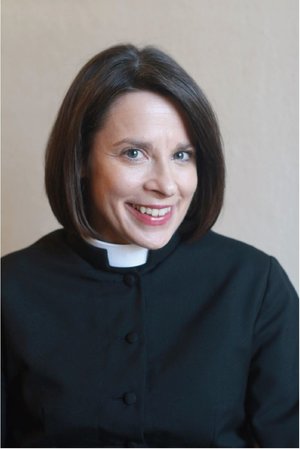
In this blog post, The Rev’d Melanie Rowell, SCP, responds to these questions:
What has praying the daily office done for your spiritual life? What is your favorite or preferred way of praying it (e.g., online, straight from the BCP, at church, apps, etc.)?
My relationship with the Daily Office began in seminary, in particular with Morning Prayer. I confess that it really wasn’t a priority or practice before then. I can honestly say that I cannot remember a priest ever mentioning its importance . . . a sad fact and something that desperately needs to be remedied. At Sewanee School of Theology, Morning Prayer began at 8:05, about 45 minutes before class started. Most of us had class first thing in the morning, so it wasn’t that much harder, after dropping kids at school, to make it to MP. Getting to Evening Prayer was less reliable, as I was so often a geographically single parent on the Mountain and had to pick up children at the same time EP occurred. Still, the rhythm of Morning Prayer was indelibly set into my spiritual psyche.
Once I graduated, however, I had no Morning Prayer to attend. Suddenly, I realized that I had to make it work for myself. I tried different ways and failed. When I had to use the BCP on busy mornings trying to get the family out of the house for school, I found it was just too much! But . . . what I finally realized is that I could do it on my terms and when I had time—as I got ready for my day or getting ready for bed. It’s one of the few times during my day that I’m a captive audience. Rite I is my go-to, and I found that the easiest way was online. Thanks to St. Bede's Breviary, I could pray the Rite I Daily Office in the “High Church Prayer Book” style, with elements for Our Lady. This was gold for an Anglo-Catholic: I could pray MP and EP my way with the convenience that the internet provides at the click of a button. Soon I was not only praying the office, but also the Regina Coeli, the Angelus, and other spiritually rich additions, along with commemorations of saints that St. Bede’s provides when you choose the “Amplified” option. As a Lower School Chaplain and mother of two girls still in school, St. Bede’s is a Godsend. I can pray MP and EP whilst getting ready for my day or right before bedtime.
Praying the office has revolutionized my spiritual life. The repetition of Canticles such as the Magnificat remind me of God’s faithfulness. Reading the various appointed Scriptures gives me an opportunity to read a wide swath of the Bible. This is exceedingly valuable when I have to preach: it reminds me of verses I might have forgotten about and gives me context for Scripture as a whole. Praying the office is not always exciting—I’ll be honest, some days, I don’t want to do it! But it has been my rock, a constant source of encouragement, inspiration, and hope during the times when things haven’t been going so well. I cling to it, and the words of these Canticles, Psalms, prayers, Scriptures, etc., stay with me throughout the day. If you’re not doing it, or you’re doing something that’s not working, try St. Bede’s or one of the other online options or apps! There are many options and settings, so no matter what your preferences, you’re bound to find something that works for you.
The Rev’d Melanie Rowell SCP, is chaplain at Holy Innocents' Lower School in Atlanta, Georgia and serves as Assisting Priest at St. Columba's Episcopal Church in Suwanee, Georgia. She serves as Secretary of the Provincial Council of the Society of Catholic Priests of North America.
The Sacrament of Reconciliation
In this blog post, The Rev’d Sinclair Ender, SCP, responds to these questions:
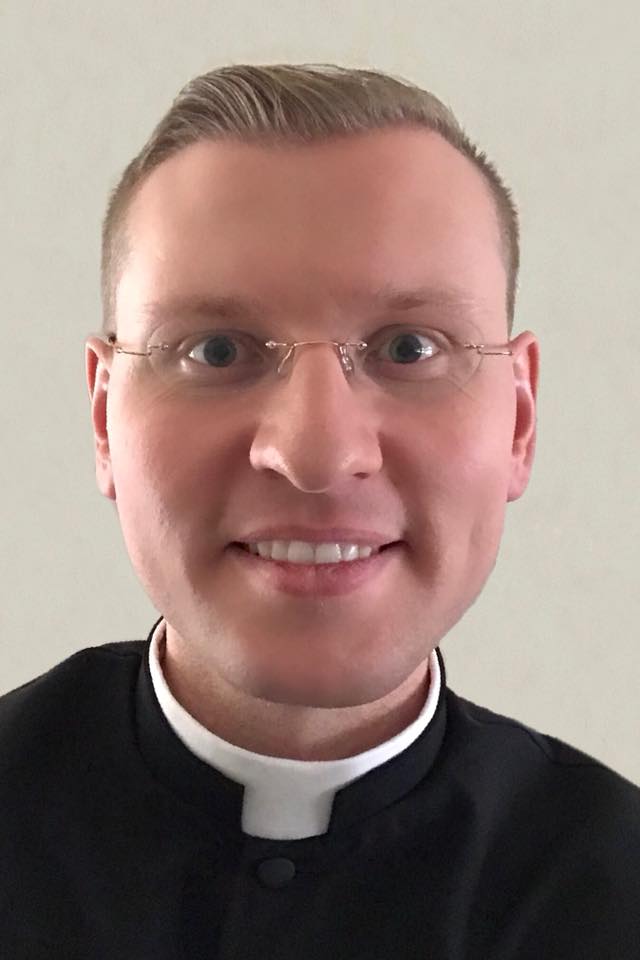
How has the Sacrament of Reconciliation changed you, both as a confessor and as a penitent? Why do you think making use of this Sacrament is should be a part of a priest’s Rule of Life? What are the qualities of a good confessor?
For I acknowledge my transgressions: and my sin is ever before me. ~Psalm 51:3, KJV
As I reflect on the season of Easter, and the joy of life in the Resurrection of our Lord Jesus, it is not lost on me that we first made our journey through darkness and death before being able to claim new life in Christ. It was through first keeping a holy Lent that we are now enjoying a holy Easter. Reflecting on these two seasons of the Church year, I see the sacrament of the Reconciliation of a Penitent as modelling death to newness of life; it participates in the paschal mystery—the life, death, and resurrection of Jesus Christ.
I recall that during Lent, my own self-reflection on Psalm 51 and reading the “Exhortation” in our Book of Common Prayer (pages 316-317) led me to think that it would be good for me to schedule an appointment with my priest-confessor.
I love the sacramental act of penitence, where I go before God with one of His ministers, and lay bare that which is holding me back from right-relationship with God, others, and often enough, myself. These are the things that I have to let die in myself, so as to find abundant life. It is when I acknowledge my transgressions that I then receive the forgiveness of God—not as a general truth or vague experience, but personally, immediately, and actually. After making a good confession, and having absolution pronounced, I’ve always experienced a sense of the newness of life in Christ. Sacramental confession is great!
As Anglicans and Episcopalians, we have no specific requirements in our doctrine or disciplines that one must make a personal confession. Our Anglican saying of “all may, some should, none must” holds true. All the same, those who do make use of this sacramental rite allow for the forgiveness of Jesus to take hold of them in a living way, which I have yet to experience by any other means.
So, if you find that there is something weighing you down or holding you back from fully experiencing the joy of this Easter Season, I invite you to “go and open your grief to a discreet and understanding priest, and confess your sins, that you may receive the benefit of absolution, and spiritual counsel and advice; to the removal of scruple and doubt, the assurance of pardon, and the strengthening of your faith” (BCP, 317).
The Rev’d Sinclair Ender, SCP, is curate of Trinity Episcopal Cathedral in Davenport, Iowa.
Living a Eucharist-centered Life
By The Rt. Rev’d Craig Loya, SCP

At the cathedral where I serve as dean, the Holy Eucharist is celebrated several days every week, in addition to Sundays, and on every major Holy Day. The weekday liturgies are not particularly well attended. There are usually fewer than five people, and it’s not unusual for only the priest and the lay server to be present.
When I first arrived, a big part of me resented these liturgies. On more than one occasion, I was ready to discontinue the practice altogether. I am too busy to get everything done already, I thought, so how could I justify spending thirty minutes celebrating the Eucharist with just a few people? What an inefficient use of my limited time!
A woman who was just beginning the process to become a deacon when I arrived reminded me that the only reason she found our congregation is because, in a moment of personal crisis, when her brother was in the midst of a surgery that did not appear to be going well, she found that we had a noon mass, and joined us to pray. That experience, and the welcome she received, helped lead her to where she is today: a deacon serving the poor and forgotten in the name of Jesus every day.
Our most dedicated and reliable congregation attends on Fridays. These four or five people have attended, almost every Friday, for several years now. Before beginning the practice, none of them knew each other. Now, they have come to share their lives in the deepest ways with each other. Two recent widowers have lunch together after every single Friday mass, and they all keep close tabs on the ninety-seven year-old woman who attends, offering spiritual and concrete assistance for her and her family.
These people, along with my commitment to the SCP Rule of Life, are the main reason I never abandoned the practice altogether, and slowly, over the years, these celebrations have become a spiritual anchor for me, and a critical way that I seek to keep the SCP vow to of centering my spiritual life on the Eucharist.
As a disciple, the noon mass interrupts my day with all of its busyness and worries, and calls me back to gratitude, the fundamental spiritual posture for a disciple of Jesus. The Eucharist, the Great Thanksgiving, gradually shapes our souls to engage every moment, every task, every encounter, from a place of deep gratitude for all that God has given. The practice of almost daily Eucharist helps me focus on God’s grace, abundantly given, rather than on my own needs and shortcomings.
As a priest, the mass reminds me who I am and what I am for. When I have to stop my day to say mass, I am reminded that the God's mission doesn't depend on my efforts, and the Church is not, finally, about my successes or failures. God's mission in the world depends entirely on the power of God's Holy Spirit, and my job as a priest is to offer myself, my labors, and the people in my care over fully to that mission in the world.
As a cathedral in the center of a city, the Eucharist is the heart that beats day in and day out for the life of our city and diocese. On numerous occasions, a random stranger has appeared at one of our noon masses, just like the woman who is now one of our deacons, telling us later that they stumbled upon our little place of prayer and quiet and just the critical moment. Whether all the people who walk hurriedly past our building every day on their way to their busy and important jobs know it or not, our daily masses help ground our neighborhood, our city, and our diocese in the current of God’s mercy and love that flows along gently just beneath the surface of our lives.
Returning to the noon mass, when I feel like it and when I don’t; when I’m too busy, or too bored, or too lazy; when I’m too anxious, or too satisfied with my own efforts; in good times and bad times, reminds me that, in all those moments, come what may, God is faithful to me, to the Church, and to the whole world Jesus died to save. So now, I thank God every day for the great gift of standing in God’s house, and swimming in that river of love.
The Rt. Rev’d Craig Loya, SCP, is tenth bishop of the Episcopal Diocese of Minnesota.
#TractSwarmSeven: Priestly Formation-Insight From the Trenches
At the recent SCP Annual Conference in Atlanta, we engaged in deep theological reflection on various facets of priestly formation. This discussion included the content and structure of seminary education, new models for academic preparation, and the spiritual formation of priests in habits of holiness.
Continuing the momentum of the conference, we are inviting current seminarians and recent graduates to offer their personal insights on the needs, challenges, and opportunities on any aspect of priestly formation. For those who attended the Atlanta conference, we would also greatly value your feedback on your experience of the conference as a seminarian or newly ordained clergy. More seasoned clergy are also welcome to submit their blog postings reflecting on our conference theme too.
Posts:
- Mark Harris – Reflections on Priestly Formation: Listen Up!
- Melanie Rowell – Priestly Formation and the Society of Catholic Priests
#TractSwarmSix: Preaching the Context
We are living in unsettled and disturbing times marked by unrest, violence, and calls for justice for the marginalized. As clergy, we have an obligation to be a voice for Christian justice, peace and mercy. In a world where moral conscience is now largely left to individuals, how does our preaching address these issues?
Our SCP members have been preaching about justice within the context of Catholic spiritual and moral teaching. We invite our members to share recent sermons in this #TractSwarm series on Preaching the Context.
Posts:
Mtr. Lizette Larson-Miller – Proper 10C Sempersacramentalis
Fr. Anthony Hutchinson – Proper 7C Ellipticalglory
Fr. Bill Carroll – Proper 10C Emmanuel Shawnee
#TractSwarmFive: Fasting-A Catholic Tradition
For our Fifth #TractSwarm, we are asking for your thoughts on the practices of “fasting and self-denial.” Why is this important to the observance of a holy Lent? What are the purposes of focusing on these practices? How can we practice fasting beyond the obvious ways involving food? What is the relationship between fasting and feasting – particularly surrounding those Sundays “in Lent” but not “of Lent”?
We are now between the historical liturgical Sundays of Sexigesima and Quinquagesima and Lent is quickly approaching. Our culture at large is aware that something is happening on Ash Wednesday as they see the faithful emerge from church with ashes imposed on their foreheads; however, beyond that the cultural understanding of Lent often revolves around “giving something up.”
As a young child in the Lutheran Church (pre-merger … yes I am that old), not much was made of the Lenten practices of “fasting and self-denial” other than having Lenten mite boxes. However, my Roman Catholic cousins ate fish on Fridays and seemed to make more out of this than we did. Only after joining the Episcopal Church did I hear the exhortation on Ash Wednesday which includes the call to observe fasting and self-denial.
For our Fifth #TractSwarm, we are asking for your thoughts on the practices of “fasting and self-denial.” Why is this important to the observance of a holy Lent? What are the purposes of focusing on these practices? How can we practice fasting beyond the obvious ways involving food? What is the relationship between fasting and feasting – particularly surrounding those Sundays “in Lent” but not “of Lent”?
Posts on #TractSwarm Five: Fasting – a Catholic tradition
Posted in the order they were written.
Fr. Ethan Jewett – The Language of Fasting
#TractSwarmFour: The Heart of 21st Century Anglican Catholicity
For our Fourth #TractSwarm, we are asking for your thoughts on this question. What is at the heart of the theology and practice of Catholic Anglicans today? What is the most important message of the Catholic tradition of our church to the broader body? What, for you, is at the core of why you identify as a Catholic?
The real development of theology is . . . the process in which the Church, standing firm in her old truths, enters into the apprehension of the new social and intellectual movements of each age . . . and is able to assimilate all new material, to welcome and give its place to all new knowledge, to throw herself into the sanctification of each new social order, bringing forth out of her treasures things new and old, and showing again and again her power of witnessing under changed conditions to the catholic capacity of her faith and life.” ~ Lux Mundi: A series of Studies in the Religion of the Incarnation (Charles Gore, ed.), Preface to the 1st Edition, 1889.
The Society Facebook Page regularly gets messages and posts from people asking if we are “real priests” and, if so, if we can answer a question about something. Several of our members get questions regularly, when people see the name of our Society, about whether they are some kind of ecumenical group for Roman Catholics and Anglicans. We seem to go back and forth in Chapter meetings and other gatherings of the Society, debating the finer points of a well-made cassock and then debating whether we should be debating about wearing cassocks! Many members are clear that they are not interested in a “gin and lace” group… while, at the same time, a good number of our members enjoy good gin and well-made lace.
What does it mean to say we are Catholic Anglicans? When we say that one of the twin aims of the Society is Catholic Evangelism… what does that actually mean? Does it mean being evangelistic within our church for the Catholic tradition? Does it mean using the Catholic tradition as the source of our evangelistic efforts outside of the church?
Most importantly, what is at the heart of catholicity for the 21st century Anglican?
This is the Theme for our 7th Annual Conference, October 7-10, 2015, in Denver. What is at the heart of Catholicity?
For our Fourth #TractSwarm, we are asking for your thoughts on this question. What is at the heart of the theology and practice of Catholic Anglicans today? What is the most important message of the Catholic tradition of our church to the broader body? What, for you, is at the core of why you identify as a Catholic?
Posts on #TractSwarm Four: The Heart of 21st Century Anglican Catholicity
Posted in the order they were written.
- Fr. Bill Carroll, “Jesus Christ in the Flesh“
- Fr. Kevin Morris, “Maintaining the Connection: the Heart of Catholicity“
- Fr. Ethan Jewett, “The Heart of Anglican Catholicity“
- Fr. Chris Arnold, “The Heart of 21st Century Anglican Catholicity“
- Mr. John Ramos-Hazlet, “Thoughts on the Heart of 21st Century Anglican Catholi
#TractSwarmThree: On Prayerbook Revision
It is a most invaluable part of that blessed “liberty wherewith Christ hath made us free,” that in his worship different forms and usages may without offence be allowed, provided the substance of the Faith be kept entire; and that, in every Church, what cannot be clearly determined to belong to Doctrine must be referred to Discipline; and therefore, by common consent and authority, may be altered, abridged, enlarged, amended, or otherwise disposed of, as may seem most convenient for the edification of the people,” according to the various exigency of times and occasions.” ~ Preface to the BCP, page 9
It is a most invaluable part of that blessed “liberty wherewith Christ hath made us free,” that in his worship different forms and usages may without offence be allowed, provided the substance of the Faith be kept entire; and that, in every Church, what cannot be clearly determined to belong to Doctrine must be referred to Discipline; and therefore, by common consent and authority, may be altered, abridged, enlarged, amended, or otherwise disposed of, as may seem most convenient for the edification of the people,” according to the various exigency of times and occasions.” ~ Preface to the BCP, page 9
In many ways, the 1979 Book of Common Prayer was a realization of many of the aims of the Catholic movement in the Anglican Communion. Communion was once more located as the central act of worship on Sundays and other Major Feasts. The office was restored and expanded. New pastoral rites were added along with a much fuller traditional observance of Holy Week. And, as the years have gone one, chasubles, candles, and many of the components of Anglo-Catholic worship are now common and uncontroversial.
At the same time, those who lived through the transition to the 1979 BCP remember how controversial it was. It was a difficult time to be a priest—exciting, perhaps—but hard.
As the Episcopal Church prepares for her 78th General Convention, one of the questions being considered is whether or not it is time for a further revision to the prayer book. Everything from gender-inclusive language to a new BCP rite for marriage has been suggested.
What is needed? Does the current Book of Common Prayer remain sufficient for our time? Is there a need for a revision, whether small or large? Or, like in some other parts of the Communion, are the days of one shared book of worship slipping away with supplemental liturgies taking the place? There have been times where the Anglo-Catholic movement has been seen as the home of much inattention to the rubrics and rules of the BCP—is that still the case?
What does Common Prayer need to look like in the Episcopal Church today—and what should General Convention be focusing on to help further that end?
For our third #TractSwarm, we are asking our members to write blog posts about their own thoughts as priests, deacons, bishops, religious, or seminarians on these questions. What do we, as the church in the 21st century believe should happen with the 1979 Book of Common Prayer?
We’d particularly invite our Canadian members to chime in—your experience of a different book can shed some light on these questions for us in the United States.
Posts on #TractSwarm Three: Prayer Book Revision
Posted in the order they were written.
- Fr. Kevin Morris, “What We Have; What We Lost; What We need“
- Fr. Jared Cramer, “Thoughtfully Reflective Prayer Book Revision“
- Fr. Ethan Jewett, “Anglican Comprehensiveness and Prayer Book Revision“
- Fr. Keith Voets, “Prayer Book Revision: An Impending Nightmare or A Catholic Opportunity“
#TractSwarmTwo: Faith in Christ's Resurrection
I believe in Jesus Christ, his only Son, our Lord… on the third day he rose again.”
Each day in the public prayer of the church, we confess belief in the resurrection through the Apostles’ Creed. Each Sunday and other major feast we confess as well that we believe that “On the third day he rose again in accordance with the Scriptures.”
“I believe in Jesus Christ, his only Son, our Lord… on the third day he rose again.”
Each day in the public prayer of the church, we confess belief in the resurrection through the Apostles’ Creed. Each Sunday and other major feast we confess as well that we believe that “On the third day he rose again in accordance with the Scriptures.”
However, what exactly does it mean to believe in the resurrection? Must all Christians believe in the literal bodily resurrection of Christ? If so, why? If not, how do we understand these creeds?
And, perhaps most importantly, how does our belief in Christ’s resurrection change the shape of our lives, how does it affect the way we think and act and worship as Christians?
For our second #TractSwarm, we are asking our members to write blog posts about their own thoughts as priests, deacons, bishops, religious, or seminarians on these questions. What do we, as the church in the 21st century believe we are celebrating in the Great Fifty Days?
Swarm on!
Posts on #TractSwarm Two: Faith in Christ’s Resurrection
Posted in the order they were written.
- Fr. Bill Carroll, “Easter Day: Dancing in the Streets“
- Fr. Christopher Arnold, “On the Resurrection“
- Fr. Gorden Reid, “The Resurrection“
- Fr. Ethan Jewett, “Billy Elliot, Doubting Thomas, and the Resurrection“
- Fr. Jared C. Cramer, “The Perils of Failure to take Resurrection Seriously #Baltimore“
#TractSwarmOne: The Sacrament of Reconciliation
“All may. Some should. None must.” This aphorism regarding the practice of private confession is one of the most potent and popular in the Episcopal Church. But does it actually represent what we believe as Episcopalians regarding the Sacrament of Reconciliation?
“All may. Some should. None must.” This aphorism regarding the practice of private confession is one of the most potent and popular in the Episcopal Church. But does it actually represent what we believe as Episcopalians regarding the Sacrament of Reconciliation?
During Lent, many churches hear the Exhortation, including the call to avail yourself of “a discreet and understanding priest” when you are particularly burdened. It urges the faithful to careful preparation for the reception of Holy Eucharist.
For our first #TractSwarm, we are asking our members to write blog posts about their experience of the Sacrament of Reconciliation. Is it a part of your life? Should it be a part of the life of every Episcopalian? Is the aphorism above accurate… or is it time to revisit the way we talk about this Sacrament?
Swarm on!
Posts on #TractSwarm One: The Sacrament of Reconciliation
Posted in the order they were written.
- Fr. Gordon Reid, “SCP #Tractswarm – Sacrament of Reconciliation“
- Fr. Jared Cramer, “All Should. Most Don’t.“
- Mr. Zach Brooks, “All May, None Must, Some Should #TractSwarm“
- Fr. Jonathan Colton Chesney, “All may; Priests must“
- Fr. Bill Carroll, “On the blessings of auricular confession“
- Fr. Daniel Stroud, “The Sacrament of Confession“
- Fr. Ethan Alexander Jewett, “#TractSwarm – Confiteor“
- Fr. Chris Arnold, “How Confession Works“
- Mx. Andrew Amanda Leigh-Bullard, “Letting Love Conquer the Oppression of the Soul“
Advent 2 & Ferguson
The Right Rev. C. Christopher Epting is Assisting Bishop in the Diocese of Chicago. Though not a member of the Society, he has affinities for much that we hold dear and submitted this post in the hope of saying something worthwhile in this troubled time.
Advent 2, Trinity Cathedral, Davenport Iowa
On this Second Sunday of Advent, our Presiding Bishop has asked us to remember the victims of the Ebola virus, especially in West Africa, and to pray for our church’s efforts to combat this dread disease. I had even prepared something on that… but now feel that I cannot avoid addressing a disease affecting us even closer to home.
I speak of the deepening racial divide in this country spotlighted by recent Grand Jury decisions in Missouri and New York not to bring indictments against certain police officers involved in the deaths of two Black men.
Some of us, deeply mindful of the difficult and dangerous job law enforcement officers have, and of the fact that they put their lives on the line every day to keep us safe, are content with the fact that provisions are made in the law to give the police permission to use deadly force, even the responsibility to use deadly force though tragedies sometimes occur in the application of such measures…such as the killing of Tamir Rice, the 12 year old boy in Cleveland who displayed a realistic-looking toy gun.
Some of us, deeply conscious of the sad legacy of slavery and segregation in this country, the effects of which are still with us, are saddened that such incidents remind especially African Americans of the bad old days of lynching and of the more recent heavy handed policing in the years leading up to and including the civil rights demonstrations we all remember so well.
All of us, it seems to me, must admit that there remains a huge chasm between the majority and minority communities in this country which, for all the progress we have made, does not seem to be narrowing or overcome but simply bubbling right below the surface just waiting for an emotionally charged act to occur in order to erupt once again.
From the Rodney King affair in the early 1990s to the O. J. Simpson trial to the more recent deaths of Trayvon Martin, Michael Brown, and Eric Garner, study after study reveal the fact that White and Black Americans view these things in almost completely opposite ways, not so much because of the “facts on the ground” (which in most cases will always be disputed) but because of personal experiences each of us has had and the very different histories we have lived out, even though we are citizens of the same great country.
I wish I had solutions to suggest for healing this great divide. I do not. But as one who grew up in the deep South and drank in the legacies of slavery and segregation with my mother’s milk, I know that the effects of these things are far from over and that we will never be the “one nation under God” we claim to be until they are. I know that “quick fixes” like body cameras on police officers will not solve the problem. And my Faith tells me that only repentance and forgiveness, the building of personal relationships and the hard work of reconciliation will begin the process of healing that we so desperately need.
Hmmm…repentance and forgiveness…relationships and reconciliation. Those sound like Advent themes to me.
I wonder if you would be willing to join me in a couple of minutes of silent reflection about what you could do, in these dark days, to try and become part of the solution instead of part of the problem in our racially divided land. Are there things you need to repent of? Someone you need to forgive (even the stranger…or an “enemy”)?
Is there some way you can build a relationship with someone who is very different (maybe even of a different color) than you? What would reconciliation look like… in your family…in your neighborhood…in THIS neighborhood…and in our country? Let’s think about these things together in silence for a little bit…
Comfort, O comfort my people, says your God.
Speak tenderly to Jerusalem, and cry to her that she has served her term, that her penalty is paid…
In the wilderness prepare the way of the LORD, make straight in the desert a highway for our God.
Every valley shall be lifted up, and every mountain and hill be made low; the uneven ground shall become level, and the rough places a plain.
The glory of the LORD shall be revealed, and all people shall see it together…
Let us pray,
Merciful God, who sent your messengers the prophets to preach repentance and prepare the way for our salvation: Give us grace to heed their warnings and forsake our sins, that we may greet with joy the coming of Jesus Christ our Redeemer; who lives and reigns with you and the Holy Spirit, one God, now and forever. Amen.
The Right Rev. C. Christopher Epting is Assisting Bishop in the Diocese of Chicago. Though not a member of the Society, he has affinities for much that we hold dear and submitted this post in the hope of saying something worthwhile in this troubled time.
On the Way of Indirect Achievement
As a former Benedictine monk I am probably a little biased, but I believe that we as Anglo-Catholics have a great deal to learn from the vision of Christian life set out in St Benedict’s Rule. No less august a supporter of this Society’s outlook than the Rt Rev’d Rowan Williams, former Archbishop of Canterbury, has commented on the Benedictine flavor (or perhaps more appropriately “flavour”) of the Anglican way.
As a former Benedictine monk I am probably a little biased, but I believe that we as Anglo-Catholics have a great deal to learn from the vision of Christian life set out in St Benedict’s Rule. No less august a supporter of this Society’s outlook than the Rt Rev’d Rowan Williams, former Archbishop of Canterbury, has commented on the Benedictine flavor (or perhaps more appropriately “flavour”) of the Anglican way.
One of the many things we stand to learn from the Father of Monks and of Europe is the importance of what I’ll call indirect achievement.
The very titles I have used here attest to this point. Benedict of Nursia did not set out to be the “father” of anything. He set out simply to pray. That his life of solitary prayer in a cave at Subiacco should have grown into the founding of monasteries, branched out into the composition of the most enduring of monastic rules, flowered in mystical vision, and borne fruit in the creation of European culture (among so many other things), would all have been regarded by the great Abbot himself as of secondary importance.
The same is true of his daughters and sons, at their best. Between the eigth and the eleventh centuries, Benedictinism was the dominant force in the life of the Western Church and, one could even argue, of the Western World. Monastic communities built great churches (and a Benedictine abbot more or less invented Gothic architecture). They wrote and illustrated beautiful manuscripts of essential importance in the preservation and transmission of texts ranging from the Bible to works of classical literature. They composed exquisite music. They wrote important works of theology. They even became some of the most powerful landowners of their time.
All these achievements, however, would have been regarded by the communities responsible for them as byproducts of their real raison d’etre, which was simply the search for God (as Pope St Gregory the Great so memorably put it), toward which all their work was oriented. The churches were for praying in. The books were for learning to read (the Classics) in order pray (the Divine Office, Mass, lectio divina). The music was, as some scholars of chant would still argue today, not music so much as sung prayer. The theology was written in the service of prayer and as the outpouring of prayer (and thus nearly always in the form of commentaries or homilies rather than systematic treatises). The land and the agriculture it supported were to provide a livelihood for the monastics so that they could sustain the search for God in work and prayer.
I must avoid idealising the monastic achievement. It had its dark side. There were systemic problems (like the second-class status of “lay brothers” and of all women monastics throughout much of history, or the injustices occasioned by all that land ownership). There were also occasional ones (arising and subsiding with the ebb and flow of fervor, decline, and reform). St. Bernard, one of the great monastic mystics, was also a bitter controversialist. But despite the flaws, the achievement was – and is – real. And it was (and remains) essentially indirect.
There is much that our Society hopes to achieve. Dauntingly, perhaps it may sometimes seem overwhelmingly, much.
All the more reason, then, to take up the Benedictine imperative to aim at something other than what we might think of as our concrete goals. To aim, simply, for God. And to allow what we hope to achieve in practical terms to take shape, almost unobserved, on what will seem like the periphery.
What I am talking about here is – unsurprisingly – largely liturgical. The hallowing of time by the Daily Office, the transcendence of time in the Eucharistic meeting of heaven and earth, the inhabiting of time in our personal prayer and in the undertaking of all our work as a quest for God. All this will aim us in the right direction, keep us on course or correct our course as needed. And it will free us to accomplish, within the life of the Holy Trinity, much besides.
***
If these themes interest you, consider perusing the following books:
Jean Leclercq: The Love of Learning and the Desire for God
Ivan Illich: In the Vineyard of the Text
Alexander Schmemann: Introduction to Liturgical Theology
***
The Rev. Dcn. John Hazlet is a parishioner of St. Thomas the Apostle, Hollywood, CA. He was ordained to the transitional diaconate while a (Roman Catholic) monk but has not been in ministry since leaving the monastery. He holds the degrees of BA (philosophy) from Grove City College, PA, and MA (theology) from the University of Oxford. At present, he works as a realtor and has a small shop on Etsy.
Anchor and Visionary: Models for Church Leadership
Recently I was asked to prepare some remarks for a continuing education conference I attend every year called, “Gathering of Leaders.” One of the very great things about this conference is that while the year’s theme is decided by a governing board, the content of each “Gathering” is user driven. This year, I was asked to prepare remarks for a “Returnee’s Panel,” wherein I and two others who had attended several “Gatherings” would offer our thoughts to first-timers on why we keep coming back. While my talk was given without a manuscript, this is more or less a written adaptation of what I’d said.
Recently I was asked to prepare some remarks for a continuing education conference I attend every year called, “Gathering of Leaders.” One of the very great things about this conference is that while the year’s theme is decided by a governing board, the content of each “Gathering” is user driven. This year, I was asked to prepare remarks for a “Returnee’s Panel,” wherein I and two others who had attended several “Gatherings” would offer our thoughts to first-timers on why we keep coming back. While my talk was given without a manuscript, this is more or less a written adaptation of what I’d said.
I am a firm believer in the idea that most church leaders (lay and ordained) can be divided into two categories: anchors and visionaries. Anchors are those leaders who root us to our past; keep us firmly grounded in our sacred traditions; remind us of our history; call us to attend to our scriptures with focused learning; celebrate our sacraments with a grounded understanding of their significance and a high theology of their continued efficaciousness in our lives. Because they are leaders, the very best of our ecclesiastical anchors do all of this with a strong sense of purpose rather than meaningless fussiness; with a love for the historical that never strays to idolatry; with a clear grasp on the narrative arc and importance of scripture while not forgetting that God is even bigger than we can write Him; and with a reverence for our sacramental rituals that is adoring more than it is adorned.
However, if the church were comprised solely of anchors, then we would fail in the mission Christ set before us. For the metaphor would hold true and the ship of Christianity would be stuck in the mud and be able to go nowhere. This is why we need our visionaries.
Visionaries are those leaders who dream us into the possibilities of the future; who keep us moving when we would much rather remain comfortable and secure; who challenge us to live into and beyond the accomplishments of our holy predecessors; who ask the provocative questions that call us to think about our theology in a quickly and ever-changing world in which circumstance and technology can seem to be leaving the relevance of scripture behind; who take our sacraments and rituals routinely beyond the walls of our churches of stone and wood with a strong sense of mission informed by the shrinking nature of our world geography. Because they are leaders, the very best of our ecclesiastical visionaries do all this with a great hope of what could be while appreciating the gifts already present; with a restlessness for mission rather than a contentedness for what already is; possessed of a zeal inspired by the saints while not being frozen by intimidation of them; with a holy curiosity for how scientific advancement and progress in human understanding of our universe can inform and be informed by theology and scripture; with a divine desire to see the beauty and mystery of our traditions and liturgies shared in as many venues and ways as possible.
However, if the church were comprised solely of visionaries, then we would drift away on the winds of fads and with the fickle vagrancies of the times. The great ship of Christianity would be cast adrift from the mud with purpose but without a plan to sustain it, with hope but without root to nourish it. No, it seems clear to me that the church needs both kinds of leaders if we are to carry the mission of Jesus Christ into this great 21st century and beyond. More than that, the church needs both kinds of leaders to work together, and not against each other.
This is why, each year, I make a great effort to attend the same two conferences for continuing education. They represent the very best in leadership training that I have found. One, a society of “anchors,” if you will. The other, a gathering of “visionaries.”
In my few years attending the annual conference of the Society of Catholic Priests, and through the benefits of membership in its fellowship, I have learned more about the great traditions of our church than in any book or seminary class. I have come to understand that sometimes the faithful few in my pews are more important for me to focus on that the great masses of humanity other churches have. I have benefitted tremendously, both personally and professionally, from this band of clergy dedicated to worshipping God in the full beauty of holiness and to carrying the light of Christ to the darkest places of both our cities and rural areas, where the lowest and the forgotten of our great land live and move and have their being. I have learned the meanings of our ancient rituals and their continued importance today in a world just as hurting as it was in times gone by, if in different ways. Most importantly, I have gained an increased sense of the significance of sign and symbol, always pointing beyond to something greater. Always pointing to Jesus Christ.
Even though I personally identify more with this group of “anchors,” each year I also attend the “Gathering of Leaders,” a conference designed for the visionaries of the church, and unabashedly about numerical growth. At these gatherings and through the benefits of membership in its fellowship, I have learned so many best practices for adaptive leadership from those who are practicing them and seeing the results. My congregation and, dare I say, those whom we serve in our surrounding community have benefitted from the imaginative and prophetic ideas for mission and outreach that have been bandied about at the famous “networking sessions” of these Gatherings. I have heard what can only be described as examples of the very best of new, “on the ground,” theological thinking, fearlessly engaging a fast paced and increasingly unchurched culture. Most importantly, I have gained an increased sense and born witness to the fruits of the transformational power of grace which we boldly proclaim in Jesus Christ.
We are the body of Christ. We are living out our baptismal vows in this corner of Christ’s Body that we call Episcopalian. But we so often bound gleefully down the rabbit holes of false dichotomies. It is either this way or that way. It can only be progressive or traditional; it can only be liberal or conservative; it can only be building-centric or emergent. The fact is we all have different gifts and we need each other. The progressive brother cannot say to the traditional sister, “I have no need of you.” This is why I delight in both conferences, and why I encourage all of us, lay and ordained, to find some way to participate in the full beauty and joy the wide range of our church represents. Our God is amazing and Christ died to offer all of us the new life of grace, mercy, forgiveness, and love. So let us climb out of the holes we have dug for ourselves and see the dayspring from on high again as if for the first time.
The most transformational words the church can offer are these, “This is Body of Christ. This is the Blood of Christ.” So let us take and eat, take and drink. Let us taste and see. Let us be the Body of Christ and live more fully into this great and holy calling, whether anchor or visionary, nourished by Word and Communion, and strengthened for service in a world which God still loves abundantly.
The Rev. Ryan Whitley serves as Rector of St. George’s Episcopal Church in Aardmore, PA. He is a member of the Holy Cross Chapter of the Society, whose members serve in Pennsylvania.
Eating Fruit Where We Are: Or, How Saying the Mass Can Save the World
The hope of the SCP, as I understand it, is to cultivate priestly vocations deeply rooted in the Catholic habitus of Christ’s Church in the hopes of better sustaining the clergy of the Church and renewing the apostolic zeal to restore all things to God in our Lord Jesus Christ. For such a noble task to be successful, it’s important to know where we are. Proper cultivation requires careful attention to place. So, to get a handle on where we are, let’s consider two figures: the fire and the tree.
The hope of the SCP, as I understand it, is to cultivate priestly vocations deeply rooted in the Catholic habitus of Christ’s Church in the hopes of better sustaining the clergy of the Church and renewing the apostolic zeal to restore all things to God in our Lord Jesus Christ. For such a noble task to be successful, it’s important to know where we are. Proper cultivation requires careful attention to place. So, to get a handle on where we are, let’s consider two figures: the fire and the tree.
Fire, as a material reality, lives by destruction through expansion and indiscriminate consumption. Death, fire’s stern ruler, guides this unified principle. The fear of death causes fire to ceaselessly seek new fuel – of whatever type it can find. The avoidance of death is the only good. For fire to avoid death, however, requires the death and annihilation, the coming to nothing, of something else. Think of a house fire. The ashes may be useful for something, but the charred remains are useless as a house. The house’s ruination was a necessary condition for the fire’s life. Either the house is saved but the fire extinguished, or the house is destroyed and the fire lives. No other possibility exists. Fire, having extinguished the life of all it has touched, also loses its life and dies. Fire only lives through destruction; the cessation of fire’s destructive power yields fire’s own death.
Trees live through conservation under the principle of enrichment and preservation. They drop leaves that replenish the nutrients they’ve extracted from the soil as well as give the soil solidity and strength through vast root systems. There are many accounts of early American settlers marveling at the soil’s fertility in the so-called virgin forests of the east coast. Big, beautiful trees had created rich, vibrant soil. A necessary condition for the life of trees is the life of the soil around it. Without the continued nurture of their soil trees cannot live. As a result, their life contributes to the vitality and health of what it lives on. Even their death contributes to the life of what gave it life. The soil from which trees live receives its life and health from the trees decomposition. Trees only live through conservation; without it, soil disappears and trees themselves die.
These figures place in view opposing modes of life. One is characterized by depletion, a conversion of life to death through failing to recognize either borders or satisfaction. The other is a life lived through preservation that uses some of the life around it only to return that life to its sources, and even in its death it gives itself to the place where it lived as an act that makes new, strengthened, and more vital life possible.
Fires and trees can’t live any other way. Fires can’t live by preservation. Trees can’t live through destruction. Human beings, however, are free to live in any number of ways. It seems obvious which makes for a good life, but it must be admitted that so much of our contemporary Church is consumed with living like fire. The gleam of fire, or the fear of death, has sparkled in our eyes. The sustainable, careful habits of trees have failed to impress. As a result, we have pursued ways of living that we hope generate rapid growth and expansion without asking about long-term viability, its effects on the sources of our lives, about the inheritance we have received, or the inheritance we’re leaving. That’s all fire-breathing stuff, and it has consumed our church.
The Church lives by fire when we spend time at expensive conferences on the topic of “welcoming,” which never fail to include public shamings for those who might not be inclined to the kind of desperate begging for new people that also characterizes fast food chains. And since we have taken on the characteristics of fast food chains we, too, begin marketing ourselves in a similar guise. The effects have been devastating because marketing, always looking for a competitive edge, lives by devouring the most unsustainable, disposable materials. Living by fire and putting trust in marketing can be fairly easily equated, and we have numerous examples.
We laud ourselves as welcoming and diverse, yet we can’t explain why we’re overwhelmingly educated, disproportionately wealthy, and have little to no presence in rural, “uncultured” communities. Not unlike most marketing schemes, we’re not terribly interested in a coherent vision. The moment we detect a cooling of the flames in our latest we’re-welcoming-and-diverse campaign, we ramp up the “don’t check your brain at the door” sale, which has the convenient dual function of praising our own intellectual habits while belittling other dense, out-of-touch, close-minded churches (but we’re tolerant!). Our target audience – any educated middle class person with ears – tipped off by the insistent reference to the vacuous term “mystery,” ought to quickly recognize that our priests, to say nothing of parishioners, cannot begin to articulate or exposit the Creeds, let alone think with subtlety or clarity about the different strands of our intellectual heritage. Their religious MBA (the MDiv) has ill-equipped them for such a task, but relating to people, after all, is what seminary is all about, not the formation of mind, body, and spirit to be competent bearers of a tradition. “People skills” provide the chimera of being a compassionate community. When this fails, we chuck the entire gas can onto fading embers and declare that our true Anglican identity is not Erastian, but prophetic. As prophets, we tell ourselves that we are a unique people who make no peace with injustice; we console ourselves by noting that our shrinking ASA is the lamentable result of speaking truth to power. What we fail to mention, however, is that unlike Isaiah, we are prophets with hundreds of billions of dollars worth of property, extraordinary insurance packages, and a pension that causes envy in the eye of our business-clad parishioners. But we’re definitely prophets, Most of our priests, after all, prefer rural Mississippi, but because the poor areas are so saturated with clergy, some sad souls must undertake the insufferable task of ministering in the barren wildernesses of New York, Boston, DC, Los Angeles, or the Bay Area. Indeed, we are the prophetic church.
Sarcasm aside, what else would we expect from two generations of clergy educated on attempts by consumer-minded seminaries to be cutting edge and experimental instead of training its students in the way of life necessary for the flourishing of clerics? Attempts at intellectual buffet-style novelty and liturgical experimentation have simply reduced our ranks to a mass of poorly trained therapists because, while the Daily Office, fasting, and confession are all optional to ordination, Clinical Pastoral Education is not. Intellectually, without a firm grounding in Scripture, Patristics, and Anglican Divines, we slide in the vague moralisms we learned as undergraduates. We are more prepared to question the authority of Scripture than that of private judgment or personal experience while conflating the skepticism of the Academicians with Anglican comprehensiveness. Liturgically, we descend into a veritable buffet of sentimentality, drawing from all sorts of parties, loyal to none. The result is sermons that sound more like apologias for the Democratic party than the proclamation of salvation from all political savior myths in the person of Jesus Christ, and liturgy that looks and feels more like arcade fun zones than the heavenly Jerusalem. In such environments, it can be no surprise priests are more prepared to commune the unbaptized than they are to read the Exhortation, if only because we don’t know the Didache, and all the documents following, explicitly denounces the practice, and we haven’t the faintest idea where the Exhortation might be found. We are just as likely to post “No Trespassing” signs outside our parishes next to the “Episcopal Church Welcomes You” ones, since, after all, our church is a house of prayer for all well-mannered, safe people.
These are all instances of living like fire. The results are entirely as expected. Many have left our parishes, and many have come looking for a place with good music, and less demands than their local YMCA membership. And just like fire, it has left everyone involved worse for wear. Both a distinctive Anglican intellectual tradition and a coherent liturgical, sacramental habitus have been used as pyre.
Ironically, all this burning away of what we stood on, I think, has been undertaken in good faith. There has been no malicious intent, not even when traditions were consciously charred, because I take it that most of it has been done as an attempt to be faithful to the movement of the Spirit, and out of love for the Church. We have done these things because we think we have been following the Spirit. Yet our judgment has been that the Spirit is more at work in Pride parades than in Corpus Christi processions. Not only that; our clergy are better equipped and prepared to both participate in and argue in defense of the former than the latter. That should give us pause. It should bend our knees, moisten our cheeks, terrify our hearts. As a church, we no longer believe that the sacramental life will save us. We speak and act as though something else must. We are engulfed by flames. And for what? Apparently something interesting to fewer and fewer folks. They can get parades of all kinds anywhere. Christ need not be risen for a parade. Not so for Corpus Christi processions.
So that’s where we are, a burned over pile of ash. If we’ll suffer St Paul, he can illumine our next move, “If any man’s work shall be burned, he shall suffer loss: but he himself shall be saved; yet so as by fire.” To where do we turn to be saved? “To the Lord our God, until he show us his mercy.” And where is his mercy to be found? “All glory be to thee, O Lord, for that thou, of thy tender mercy, didst give thine only begotten Son to suffer death upon the Cross for our redemption.” And what is the content of this tender mercy? “Thou art the same Lord whose property is always to have mercy. Grant us, therefore gracious Lord, so to eat the Flesh of thy dear Son Jesus Christ, and to drink his Blood, that we may evermore dwell in him, and he in us.” And what is the effect of this dwelling? “I am the vine, ye are the branches: He that abideth in me, and I in him, the same bringeth forth much fruit.” And what is the vine? “Thou rod of Jesse’s stem, from every foe deliver them that trust Thy mighty power to save, and give them victory o’er the grave.” And what’s the fruit? “His beauty doth all things excel, by faith I know, but ne’er can tell, the glory which I now can see, in Jesus Christ the apple tree.”
Christ is the tree. Christ himself, waiting to be found, loved, and adored in the Blessed Sacrament of the Altar, is the tree that gives life. That we have fanned fire upon fire, and lived to tell can but be attributed to Christ’s sustained presence among us in celebration after celebration of the holy Sacrifice of the Mass. If we want to cultivate something life-giving, if we are truly searching for deep, abiding roots, we do well to submit to the One who on Easter Morning appears to be a gardener. It is the Mass, diligently, reverently, even obstinately said, in the well-worn, now unfashionable garb that takes too long to put on, with attention to the details of movement, posture, and pitch of voice, with the requisite preparatory and concluding prayers, each and every day, that will turn us into trees that can resist the flames of our day. In the Mass the fruit of unending life becomes manifest. It is fruit that comes from the old, holy rood, and nowhere else. It is the fruit that both gathers all life into itself and produces it afresh everyday. Christ is Tree. Christ is Fruit.
If we are serious about the cultivation of deeply rooted Catholic priests, we must insist on daily Masses in all of our parishes. We must attend to the Tree. We must sit awhile under its broad, ancient canopy, sheltered from the scorching fire of the sun. We must gaze upon this most beautiful tower that has endured all manner of fire, each one purifying it with greater and greater resplendence, showing it to be the only truly saving tree. We must see “a beauteous tree uplifted in the air, enwreathed with light, brightest of beams. All that beacon was enwrought with gold. Four jewels lay upon the earth, and five were at the crossing of the arms. All the winsome angels of the Lord gazed upon it through the firmament…Wondrous was that victor-tree, and I was stained with sin and wounded with my wickedness. I beheld the cross of glory, shining in splendor, graced with hangings and adorned with gold. Worthily had jewels covered over all that forest tree.” Then, and only then, will we be, “trees planted by streams of waters, bearing fruit in due season, with leaves that do not wither.” Then, and only then, it shall be said of Catholics the world over, to the praise of the Most Holy, Blessed, and Glorious Trinity, “Everything they do shall prosper.” Not a bad place to be.
The Rev. Justin Fletcher serves as Rector of St. Luke’s Episcopal Church in Chickasha, OK. He is a member of the Blessed Sacrament Chapter of the Society, whose members serve in Oklahoma
Liturgy Moments: A Creative Approach to Liturgical Catechesis
One of the greatest challenges that many of us clergy face in today’s twenty-first century society is time. We no longer live in a society in which Sunday is honored as a day of rest, at least not here in the Mid-Atlantic area. It is no longer unusual, in fact rather typical, now for people to work on Sundays. Schoolchildren will often have athletic events, preparation classes for standardized tests and community service activities to do on Sundays. Furthermore, with the rest of the week so packed with activities, Sundays become the overflow day. These hectic schedules and over-programmed lives make our task as clergy much more difficult. Oftentimes, we rejoice simply to see people show up on Sundays for our primary worship services. The extra commitment required for formational activities seems nearly impossible.
One of the greatest challenges that many of us clergy face in today’s twenty-first century society is time. We no longer live in a society in which Sunday is honored as a day of rest, at least not here in the Mid-Atlantic area. It is no longer unusual, in fact rather typical, now for people to work on Sundays. Schoolchildren will often have athletic events, preparation classes for standardized tests and community service activities to do on Sundays. Furthermore, with the rest of the week so packed with activities, Sundays become the overflow day. These hectic schedules and over-programmed lives make our task as clergy much more difficult. Oftentimes, we rejoice simply to see people show up on Sundays for our primary worship services. The extra commitment required for formational activities seems nearly impossible.
And yet, one of the responsibilities we carry as clergy is not only to preside at worship services but also to facilitate the spiritual formation of our parishioners. This spiritual formation includes areas ranging from the Scriptures, theology, ethics, liturgy and many other important topics. With all of these competing priorities, liturgical catechesis can often take a backburner in our formational priorities. However, I have found a deep hunger among my parishioners for greater reflection on the mysteries we celebrate each Sunday.
In order to meet this hunger for deeper liturgical catechesis within the time constraints of my parishioners’ over-programmed lives, I had to come up with a creative solution. The result of that creative process is what I call “The Liturgy Moment.” Every second Sunday of the month after each of our three services (8:00 am, 9:30 am and 5:00 pm), we have our “Liturgy Moment.” Immediately after the service, those folk who are interested gather at the front of the nave, and I share some information about a liturgical topic for about five to ten minutes at the most. I deliberately keep the presentation brief so as not to require a major time commitment. The topics have ranged from the history of Lent to the theology of sacrifice in the Eucharist. I have sometimes done a series over the course of two or three months, but I usually let each Sunday stand on its own. I try to keep my comments relevant to the current liturgical season. And during the summer, I opened up our sessions to questions about which they may have been wondering.
These brief episodes – Liturgy Moments – have been quite successful in providing a regular means of liturgical catechesis. Otherwise, I would find it difficult to set aside time every month for liturgical catechesis. But because these Liturgies Moments really only require a moment of their time, my parishioners find them easily accessible and enjoyable. They do not need to make a commitment any greater than an additional five to ten minutes after the service.
Having suggested this approach, I in no way want to discourage more in depth and sustained catechetical approaches. Like many clergy, I lament the oftentimes last minute, ill-prepared and seemingly arbitrary baptismal catechesis that so many people receive. I dream of the opportunity to provide full-length catechetical programs like St. Paul’s Episcopal Church’s Pilgrims in Christ program or the Roman Catholic Church’s Rite of Christian Initiation of Adults(when done well). These longer, more in-depth and liturgically grounded programs are wonderful examples of liturgical catechesis at its best.
However, they pose two important challenges. First and most obvious, they require a major time commitment. I do not want to suggest that we shy away from asking folk to commit time to their discipleship with Christ, especially those folk who are contemplating joining the Body of Christ. A single catechetical session on the Saturday morning before a baptism does a great disservice to the importance of baptism. But not everyone can commit to a weekly meeting for several months. In some communities that expectation may be too unrealistic.
Additionally, these catechetical programs are primarily meant for persons discerning baptism. While they do extend beyond baptism at the Paschal Vigil into mystagogia during the Easter Season, they typically end by Pentecost. Therefore, they are not suitable for ongoing liturgical catechesis throughout the year. Also they are geared to people wishing to convert to the Christian faith. They do not address the needs of those persons who may have been baptized for quite some time.
The Liturgy Moment can be a way to provide ongoing, sustained liturgical catechesis for all of the faithful. Initially, the Liturgy Moment may feel too superficial. You might ask, “How could I possibly cover the intricacies of the liturgy in just five to ten minutes?” You cannot. But you can as you go month to month over the course of many months. I have found a real deepening not just in liturgical knowledge but also liturgical participation through these Liturgy Moments.
In conclusion, let me just reiterate – keep it brief! We clergy too often enjoy hearing ourselves talk. The key to success with the Liturgy Moment is that it is just A MOMENT, not a mini-sermon or forum. Also, keep it interesting and relevant. Solicit questions from time to time from the congregation. I find this very fruitful. For example, I did a three month series on sacrifice in the Eucharist after a parishioner asked me about the Fraction Anthem, “Christ our Passover is sacrificed for us. Therefore let us keep the feast.” She said she had never understood what that meant. So, we spent three sessions on Christ as Passover, sacrifice and feast. There are innumerable riches that you can glean from our liturgy to share with your parishioners – and it only has to take moment!
The Rev. Shawn Strout serves as Assistant Rector of Christ Church Parish in Kensington, MD where he is active in liturgical leadership, training and assisting with children and youth ministries. He is Secretary of the Middle Atlantic Chapter of the Society of Catholic Priests.
Ashes to Go: A Difficult invitation to Holiness
As we approach another Lenten season, many priests around the Episcopal Church and the Anglican Church of Canada are considering whether or not to adopt a relatively new Ash Wednesday practice. I’m speaking, of course, of the trend of offering “Ashes to Go.”
As we approach another Lenten season, many priests around the Episcopal Church and the Anglican Church of Canada are considering whether or not to adopt a relatively new Ash Wednesday practice. I’m speaking, of course, of the trend of offering “Ashes to Go.”
If you are not familiar with this new practice, “Ashes to Go” refers to a practice wherein clergy, sometimes accompanied by laypeople, go into the streets of their local community to offer the imposition of ashes for those going by. It is often practiced in urban areas at train stops or busy intersections.
The actual form of the offering varies rather significantly from church to church. In some churches people dress in street clothes and in others they wear full vestments. Some churches primarily and solely apply the ashes, others have crafted some sort of small liturgy that gives at least a bit of the Ash Wednesday experience to those who pass by.
There is even a website for Ashes to Go, complete with an about page if you want to learn more of the history of this practice. Sara Miles, Director of Ministry at St. Gregory of Nyssa Episcopal Church in San Francisco, talks about it in her new book—an excerpt telling the story of how it started in her neck of the woods was published in a recent edition of Christian Century. (There are some parts of her article I would take strong exception to, particularly the resistance to that which might be strange and hard to understand, but the point of this essay is not to argue with hers.)
The debate around the practice of “Ashes to Go” has been pretty strong, among clergy at least. It has been almost as strong, at times, as debates around Communion Regardless of Baptism. Full disclosure, I used to be in the crowd that didn’t think it was a good idea, believing that it ran the risk of not only cheapening the Ash Wednesday experience but also that it did not invite people into all that Ash Wednesday is intended to invite them. Then, after conversations at our Great Lakes Chapter of the Society of Catholic Priests gathering, I decided to give it a try… and my mind was changed (you can read about that experience here: “Invited: One Reflection on ‘Ashes to Go‘”).
I know that members of the Society are certainly not of one mind on the question, and I want to be clear that I don’t speak for the Society as a whole on this practice, but I do think that it touches concerns that are near to the heart of why our Society exists and what we are most concerned and passionate about when it comes to the contemporary practice of Christianity in our Anglican tradition.
One of the twin aims of the Society is “catholic evangelism.” Our Society is deeply interested in how we might invite unchurched and de-churched people into Christian community. Our Society believes that the richness of our catholic faith can provide strength, mercy, and discipline to those who are searching.
At the same time, our emphasis on catholic evangelism makes us wary of practices that water down the faith for the purposes of evangelism or incorporation. I think this wariness is good. Contrary to common thinking in many quarters of the church for some time now, I don’t think the way to invite people into Christianity is to find the most de-churchified way of talking about it. I think we should lean in the other direction, inviting people into strange language and strange practices that speak of another world, one that is seeking to break into and transform the one in which we live.
In my view, “Ashes to Go” can be a powerful example of just that—not of watering down, but of leaning in. The name, first off, seems cute, like it is perhaps making light of the Ash Wednesday liturgy. However, I would strongly suggest that though the name is playful, the experience is not. Someone may come up to me standing next to my “Ashes to Go” sign, thinking, “Oh, this is kind of fun and convenient,” but then that person is told that the church invites her into a Holy Lent. Ash is smudged on the forehead, “Remember you are dust, and to dust you shall return.” The person is told that he is sinful, but God forgives, that he is going to die…
One of the powers of our prayer book tradition is the way in which the liturgy and rubrics provide a corrective to bad theology, weak preaching, and even inadequately formed clergy. The words of our liturgies say most clearly what it is we believe—and whether or not the priest and penitent believe that this “Ashes to Go” moment is holy at the outset, the words of our liturgy make it clear that it is. The words say some countercultural, counterintuitive things. They challenge.
The most common critique of the practice of “Ashes to Go” is that it only gives the person who experiences it one part of the Ash Wednesday experience as envisioned in our prayer book—that it only gives them a portion of that countercultural message our liturgy proclaims. And this is a fair and important point… but… you cannot always say the whole message every time.
New preachers often struggle in sermon writing with trying to say too much in each sermon. “You don’t have to cover all of it in your sermon,” my homiletics professor would tell me, “Just say the piece that’s important for right now. You can do more next week, and the week after that, and the week after that.” So we must strike the balance of saying what is timely, saying it fully and faithfully, but also knowing when we have said enough—or as much as we can say at this moment.
I do believe that “Ashes to Go” can be a time when we can say enough for some people and some circumstances. In my experience, I functioned as a reminder to many of the people who passed me by in the morning, a reminder of what the day was, that the church still did talk about death and ashes. Those people may not have stopped for me, but they may now be more likely, having been reminded, to seek out a church to go to for Ash Wednesday services today.
For others I talked to, they were emotionally grateful for the experience. Their work constrained them from having an opportunity to go to services. They weren’t looking for something easy, cheap, and convenient, they simply did not have the luxury of not being at work when Ash Wednesday services were happening. One of my colleagues, another member of the Society who offered this at a highway exit, had a trucker come to him in tears, so grateful to be able to have this moment, knowing there was no way he could get to church for the full experience.
Why would we rob these people of even a portion of the Ash Wednesday message? Simply because they were unable to come and hear and experience the full liturgy? Surely not.
For others, they were curious. They never perhaps had the courage to walk into a church on Ash Wednesday, though they saw others doing it. I was easier to approach. And in this day and age, for people to want a priest to tell them that they are going to die, to invite them to confess their sins, to tell them God’s mercy is greater than they could even imagine… well, that’s a rather remarkable thing.
Most importantly, we need to remember the point of the Ash Wednesday liturgy. The imposition of ashes is important. The Litany of Penitence is important. The celebration of Holy Eucharist, a reminder of the consequences of our sin and of the extravagant grace that covers those sins, yes this is so very important. But the point of Ash Wednesday is to invite people into a Holy Lent. The reason this day exists is for the purpose of one paragraph of the liturgy,
I invite you, therefore, in the name of the Church, to the observance of a holy Lent, by self-examination and repentance; by prayer, fasting, and self-denial; and by reading and meditating on God’s holy Word. And, to make a right beginning of repentance, and as a mark of our mortal nature, let us now kneel before the Lord, our maker and redeemer.
And this is the point of “Ashes to Go.” It’s not to get people their ashes—the ashes are only a symbol of something larger. True, some people may think that they are simply getting this checked off their list, but they are mistaken. Because when that ash is smudged, they are invited to something deeper.
A good practice of “Ashes to Go” is focused on the invitation to Lent. It includes the distributing of opportunities to observe the season at the local parish and also resources for observance in other ways. It includes the priest saying, at the very least, the invitation to a Holy Lent. It involves a moment of profound and intimate truth-telling between two created beings, struggling to live through their mortality in ways faithful and yet still imperfect.
“Ashes to Go” is certainly not the fullest and best experience of Ash Wednesday—but that does not mean that it cannot be a powerful invitation to the overworked, the curious, the seeker, the broken, to enter into the Lenten wilderness and find salvation.
Click these links to download Fr. Cramer’s “Ashes to Go” liturgy leaflet that he distributes in either PDF or Word formats.
The Very Rev. Jared C. Cramer serves as rector of St. John’s Episcopal Church in Grand Haven and as dean of the Lakeshore Deanery of the Diocese of Western Michigan. He is a founding member of the Society, His reflections on life and ministry can be found at his blog: Care with the Cure of Souls.
Reclaiming Evangelism in the Episcopal Church
When I was a teenager in the Churches of Christ, I remember being trained on door-knocking. Most people are familiar with this method of evangelism, though most often it is simply described dismissively as a joke, rarely seen as a faithful way of bringing the gospel to people. However, for the tradition in which I was raised was raised, as well as for others, it is an essential way of casting your evangelistic seed wide, like the parable of the sower.
When I was a teenager in the Churches of Christ, I remember being trained on door-knocking. Most people are familiar with this method of evangelism, though most often it is simply described dismissively as a joke, rarely seen as a faithful way of bringing the gospel to people. However, for the tradition in which I was raised was raised, as well as for others, it is an essential way of casting your evangelistic seed wide, like the parable of the sower.
So there I was, a teenaged, passionate, evangelical Christian, knocking on doors to try and talk to people about their salvation. Most people were remarkably polite, more so than you might expect. But there was an oddity of the neighborhood we had not anticipated.
In the Churches of Christ, one of the fundamental tenets is the necessity of baptism for salvation. Baptism is how you receive the grace of God, it is what incorporates you into the Body of Christ. But, because of the curiosities of American religious history and geography, our tradition was used to arguing with Baptists and other evangelical groups about baptism. Most believed instead in the “Sinner’s Prayer,” while the Churches of Christ insisted that baptism was the Biblical way of becoming a Christian. I grew up thinking we were the only group that believed in baptism.
So, the entire dialogue we were trained for in door-knocking was one predicated on convincing people that baptism was essential for salvation… which made for some interesting conversations in the overwhelmingly Roman Catholic neighborhood I was dropped off in.
Because everyone agreed with me. I’d go through the whole litany of questions, ready to jump in and prove my point at any moment, only to have these Roman Catholics look at me with rather bemused expressions, telling me that yes, they had been baptized. Yes, they do believe that was what made them a part of the church.
“Well, bother, what do I say now?” I wondered to myself back then.
I’ve been involved in the Episcopal Church for almost ten years now, five of those years as a priest. I now understand much better than I did as an adolescent the theology behind the Christian tradition of baptism. I know now that since the publication of Baptism, Eucharist and Ministry over thirty years ago, the current ecumenical consensus on baptism is actually rather profound. Indeed, the theology of baptism with which I was raised led rather naturally to the baptismal emphasis of the Episcopal Church, particularly since the 1979 Book of Common Prayer.
But if there is something I am increasingly aware is missing ever since I came to be in this Anglican tradition, it is this—a sense of the role evangelism plays in the church.
Because sometimes it seems as though Episcopalians believe in baptism, but we don’t really believe in evangelism.
A part of this is our, if I may be so bold, tendency towards a bit of ecclesial snobbery. On our best days, we are often described as “denominationally non-competitive.” That is, we don’t think every Christian needs to practice their faith in our tradition to be faithful. However, we also have a deep streak of turning up our noses, “tut tutting” other church’s practices, like an ecclesial dowager countess.
And when we do that, we begin to let our catholicity slip away.
Because to be a truly catholic tradition means we are not afraid of truth no matter where it is found. Most importantly, it means that we recognize that other parts of the Body of Christ bear witness to our God in ways we have not yet comprehended. We seek to learn from them, to grow from them, to see how another part of the body can help us be more faithful.
Some people say that evangelism is just not something we do in the Episcopal Church. And that may have worked in the era of Christendom, when people were baptized into the church at birth, raised in it as an essential part of society, and expected to participate in it regularly if they wanted a significant role in the community, but those days are long past.
The idea that evangelism is just not something we do simply will not work any longer.
We need to look more carefully at our brothers and sisters in other Christian traditions, particularly those who have practiced evangelism well. We need to look at those who we think may not practice it well, asking ourselves if our reluctance comes from true disagreement on theology and Christian praxis, of it is just snobbery or cowardice. And if we disagree with the way another group does it, we need to do more—we need to come up with a way of doing it more faithfully. We need to begin once more (or perhaps for the first time!) to train our members about how you talk to someone about your faith and how you invite people into the faith.
I come from a line of people in my family who have been deeply gifted as what my former tradition called “personal evangelists.” These are people who have a calling and the training to spend time one-on-one with people who are searching, even people who may not realize they are searching. They guide people through the journey of learning about the faith, leading them to the opportunity to make a decision for the faith.
Surely, in the Episcopal Church, we can do this in more spiritually nuanced ways. We won’t fall into the all-too-common trap in some traditions of mistaking sheep-stealing for evangelism (though if the sheep of another tradition have wound up bruised and disconnected, we can faithfully welcome them to our flock). We can train people to recognize that we don’t bring God to people, we talk with people to help them discover a God who is already present in their lives. We can resist forms of emotional manipulation, encouraging decisions for Christ that are also a part of a life-long journey into the divine.
We can do all of these things. We must do all of these things.
But no longer can we say that evangelism is not something we do because it seems beneath our cultivated sense of Christianity.
And, to be honest, as we prepare in my own overwhelmingly anglo parish, in one of the most segregated areas in the entire country, to create a ministry to reach out to Latinos who live just outside of our segregated invisible walls, inviting them to be a part of us, to grow with us, to help us break down the segregation that exists in Northwest Ottawa County, to help us see more clearly the breadth and width of God in this world and in the church… as we prepare for all that, it’s becoming increasingly clear that we might even wind up knocking on some doors.
The Very Rev. Jared C. Cramer serves as rector of St. John’s Episcopal Church in Grand Haven and as dean of the Lakeshore Deanery of the Diocese of Western Michigan. He is a founding member of the Society, currently serving as Communications Director. His reflections on life and ministry can be found at his blog: Care with the Cure of Souls.
A New Oxford Movement
The following sermon was preached by Father Gordon Reid, whose parish, St. Clement’s in Philadelphia, hosted the Society for mass of our Fifth Annual Conference.
The following sermon was preached by Father Gordon Reid, whose parish, St. Clement’s in Philadelphia, hosted the Society for mass of our Fifth Annual Conference.
In the English Church in Pau in the South of France near Lourdes, there is a plaque, which states baldly: This church was built for English Catholics”. This does not mean “English Roman Catholics” but Anglicans who regarded themselves as Catholics.
In 1887, when St Andrew’s, Pau, was built, the Oxford Movement, or the Tractarian Movement, was forging ahead with its mission of recalling the Church of England to its Catholic roots, and the builders of St Andrew’s, Pau, were confident enough about their position to call themselves simply “English Catholics”. (The amusing side of that position was that some of them referred to the Roman Catholic Church in England as “The Italian Mission to the Irish”!)
It is true that two other Anglican churches were built in Pau around that time, one very Low Church, the other “Middle of the Road”. Well, the Low Church is now a French Reformed church, and the Middle of the Road one is a pornographic cinema. But the one built for English Catholics, like John Brown’s soul, goes marching on.
I tell you all this because I think that the name you have chosen for your Society is exactly right. You are (or will be) unapologetically Catholic priests, needing no qualifications. Of course, you are a Society of the American Episcopal Church in communion with the historic See of Canterbury, which may be regarded as the Patriarchal See for Anglicans. But the most important thing about you is that you are Catholic priests.
That is what John Keble, Edward Pusey and the Tractarians of the Oxford Movement were primarily concerned with maintaining, in the face of a Church of England that had largely lost that belief, though it was never totally forgotten, as was demonstrated by the Caroline Divines, among others. They faced a Church that had lost many of the signs of Catholicism and whose priests and bishops saw themselves as ministers of the State, maintainers of the status quo, comfortable deniers of all enthusiasm, whether it came from mystical Roman Catholics or wild Methodists.
The Tractarians saw that the only way for the Church of England to regain its pure Catholicism was to persuade its bishops that they were the successors of the Apostles of Jesus Christ and not important figures in society, and that the priest’s function was to offer the Holy Eucharist and celebrate the Sacraments, so that the Body of Christ might be activated in his followers, and cause them to go out into the slums and places of need, to minister to the poor, the outcast, the neglected, as Christ did in his incarnate life. They were not to be “parsons”, the chief person of the parish, but alteres Christi, other Christs.
It was because he despaired of this ever happening in the Church of England that the most famous Tractarian of them all, John Henry Newman, converted to the Roman Catholic Church. But in total contrast to him, John Keble asserted: “If the Church of England were to fail, it should be found in my parish”. And when we look at the present- day outward appearance of the Anglican Communion, we can see that Keble was vindicated in his steadfastness, and Newman isolated by his lack of vision.
In our present-day Anglican communion, every Bishop would maintain that he was in the Apostolic Succession; the Mass has become the central act of worship in the vast majority of our churches; social concern and action for the poor and needy is central to our mission everywhere.
But there is something wrong, something not quite right. Keble and Pusey and the later Ritualists, both in England and in America were all learned men, products of the theological faculties of the universities. They took it for granted that anyone who became a priest would have a sound education in Latin, Greek and often Hebrew; that they would be conversant with the writings of the Scriptures in the original languages; that they would have read much from the Early Fathers of the Church, and the Creeds they had produced. They would know the history of the Reformation and the doctrinal controversies caused by it.
But the early Anglo-Catholics realized that that was not enough to make a good priest. Specifically, they identified the lack of attention to Holiness in the formation of Anglican priests. It was for this reason that one of their chief concerns was to establish and endow genuine Seminaries for the Church. They came to see that book-learning was not what made a good priest, much less a good Christian, but instead what was needed was a formation in a devout and holy life. So seminaries were built and men went to them after taking a degree at university, so that they might learn what Monsignor Ronnie Knox, himself an Anglo-Catholic convert to Rome, called “Priestcraft”. Knox once said of that word: “I am very proud of what people call priestcraft; since even that accidental term of abuse preserves the medieval truth that a priest, like every other man, ought to be a craftsman.”
I am sure that, if we were about to have an operation, we would not be at all amused if we were told that the surgeon who was about to operate had had no practical experience of anatomy, but have no fear, he has read all about it in the text books! In the same way, the Tractarians emphasized the fact that a Catholic priest would be very little use even though he had read the Bible through and through and knew the works of the Fathers and the decrees of all the Councils by heart. A priest needed much more.
So seminaries were founded and began to teach not only extra academic things like Liturgics and Ethics, but also the things that would turn a seminarian into a priestly craftsman. They ran preaching classes and made the students preach at each other and receive criticism from each other; they taught students how to make their confession, because no priest should ever hear confessions unless they are penitents themselves. Then the seminaries had classes in how to hear confessions, how to baptize babies; how to prepare people for Confirmation and First Communion; how to conduct marriages and funerals and how to interact with the families involved in these occasions.
But, most important of all, the seminaries began to form future priests in ways of prayer and the spiritual life. They ran a disciplined regime, similar to that of the military. To use Cuddesdon, my own Theological College as an example, early rising bells called the students to Morning Prayer, which was followed by half an hour of silent prayer. Then Mass for those who wanted it (note the distinction between the Daily Office which was compulsory and the daily Mass which was not). The morning was spent in classes, the afternoon in free time. Then came Evensong and dinner and, after a short study period Compline. Then (in theory, though students then were as naughty as students now!) the Greater Silence reigned until after breakfast the next day.
As you can see, this way of formation was based on the monastic life. There is much of it that was arbitrary and would not suit present day seminarians who tend to be older, more married etc. But the most important thing about such a regime was that it inculcated in people like me the habit, and really the need, to maintain a living relationship with God through the recitation of the Daily Office, regular meditation or mental prayer and frequent attendance at Mass. This spiritual discipline has been for me and thousands like me a sort of spiritual Cape Canaveral where the rocket stands firm until it needs to be launched. Without that concrete platform of vocal and mental prayer, the higher reaches of intimacy with the Blessed Trinity would, for me at least, be almost impossible.
Now, as I said, such a monastic regime is impossible these days except for a handful of those preparing for the Anglican priesthood. But I am sure that the end result is still vital. A priest who is not disciplined in prayer and sacrament will only be half the priest he or she was meant to be. So we have to find other ways of formation which will take the emphasis away from just academic ability and achievement and concentrate more on spiritual formation. Finding ways to do this should be one of the chief aims of the Society of Catholic Priests.
Another aim of the Society, which stems from modern conditions, is to recognize that many – perhaps the majority – of our parishes are or will soon be unable to pay the exorbitant cost of a full-time priest. This is lamented in some quarters, but I am sure that it may be a great blessing and a great opportunity.
It is easier in Britain than it is here, since there those students who have been to university will have either no student debts at all or very little, since much of their fees and expenses are paid for by either central or local government. Then when they go to seminary, most of that cost is picked up by the Church. Then, when they get to parishes, they are all paid the same amount for their entire career, and that amount is just enough to live on (at the moment it is roughly $40,000 a year) out of which must come heating and lighting of large Rectories among other things.
Here, on the other hand, parishes are faced with much greater stipends plus all sorts of extra costs like housing allowances, child allowances, and of course health insurance. So a full-time priest has become an expensive item, and small parishes just can’t afford one.
Well, instead of lamenting this, I think it should become an opportunity for a fresh look at the parish priesthood.
In the UK, there are more and more priests who are non-stipendiary, who make their living in other jobs and do their priestly work at other times. There are also more and more locally based courses for training priests that do not involve much residential training. Here in the States, there is a similar trend, but as far as I see, it is still pretty sparse and is certainly sometimes looked on as a second-best option, training second- class priests.
I am certain that this should not be so. For too long we have emphasized academic learning to a ridiculous extent. People take degree after degree because they think it will make them wiser. Thousands of books are published about thousands of uninteresting and uninspiring things of little importance. People struggle to get doctorates and then don’t know what to do with them. Of course this may be true in all professions, but it is a disease that has infiltrated the Church’s thinking about training priests.
I hope that the Society of Catholic Priests may raise its voice in favour of priests being raised up in great numbers wherever they are needed – and that means in every little town of America. Of course they will need some theological knowledge, but the most important thing they need is a loving heart and a disciplined prayer life that connects them to Jesus Christ and his Father and gives them the dynamism of the Holy Spirit. And SCP should begin to produce resolutions for Diocesan conventions and the National Convention to affirm that it is a priority and the best possible use of the Church’s money to make all such training for the priesthood, both full-time and part-time, completely free. Our Church has a great deal of money and much of it is spent on peripheral nonsense. It is time we spent it on the priests of the future, for without them there will be no sacraments of salvation.
To do this, it may be necessary to remind the Bishops that they are the successors of the Apostles, just as the Tractarians had to do. And at first, we may get determined resistance, just as they did. But if the Bishops again took to themselves the choosing and the education of the future priests for their dioceses as one of their most important functions – and made sure that no one was impeded in this vocation by any lack of money, this would be an enormous step forward.
This would go a long way to ensure that the Episcopal Church, which the Tractarians and early Anglo-Catholics had the confidence to declare the purest and closest form of Christianity to that of the Apostles and the Early Church – might be able to be present not only in every little town of rural America, but also in every city slum of urban America. I am the last person to want to see an end to the Ecumenical Movement, but I have to say that I believe it is important for those of us who belong to the Society of Catholic Priests to be quite honest and open about our desire to see many of our fellow Christians delivered from the clutches of fundamentalist churches which have made of the Bible an idol, into a Church which treasures the Bible and the Tradition and Reason as equally important means for God to reveal himself through Jesus Christ to the world today. And
we must be equally (and probably more sorrowfully) willing to proclaim that we are happy to liberate Roman Catholics and Orthodox Church Christians from the misogynistic and homophobic teaching, which is their official line (though thankfully many of their priests hate those teachings privately as much as we do). But why should it have to be private – that is a hypocrisy from which we can deliver them if they will be received into the Episcopal Church.
As you can see, I believe that the Society of Catholic Priests has a great vocation ahead of it in the 21st century. And that vocation is nothing less than a new Oxford Movement. Of course we can’t call it that, but maybe the way forward is to begin a new Tractarian Movement and to shower the Church with hundreds of Tracts for the Times on the basics of the Faith and moral teaching of the Church.
But before we can do that honestly and with hands on hearts, we have ourselves to be in a constant state of connectedness with the Blessed Trinity from whom all our hope, faith and love depends. And for that we need the Daily Office, regular Confession and spiritual direction and the constant joyful offering of the Mass.
My brothers and sisters, there is no greater vocation on earth than the one you have chosen. Go for it!
Father Gordon Reid served as rector of St. Clement’s Episcopal Church in Philadelphia, PA.
What is to Prevent Us?
The following sermon was preached by Society Convener, Mother Erika Takacs, at the closing mass of the Fifth Annual Conference of the Society of Catholic Priests. It is a fitting inaugural post for the new SCP Blog: Tracts for These Times.
The following sermon was preached by Society Convener, Mother Erika Takacs, at the closing mass of the Fifth Annual Conference of the Society of Catholic Priests. It is a fitting inaugural post for the new SCP Blog: Tracts for These Times.
It was hot in the chariot, I imagine. Stuffy and still and hot. They had stopped on the side of the road, something to do with an axel that the eunuch didn’t understand, and so he sat, baking in the desert in his glorious, gilded oven. The high wooden doors trapped the heat, and the sun beating down on his uncovered head made the air shimmer before his eyes. The plush pillows had all been thrown to the floor an hour ago, but still the cloth beneath his legs felt uncomfortably wooly and warm. It was hot in the chariot, close and dusty, and the eunuch felt entirely trapped. Trapped in the still air of this chariot, trapped on this bleak wilderness road, and not least, trapped in this snarl of a biblical text. He glanced again at the scroll draped over his knees like an unwelcome blanket. The passage he had thought might distract him while he was trapped in this infernal box now only made him feel more claustrophobic. What in the world was Isaiah going on about? A man, some man, a slave who would suffer and bleed and yet utter not a sound, who would be humiliated and tortured, who would lose his life, silently, humbly, obediently. The eunuch had heard the text in Jerusalem, and now, days later, he found the prophecy about this servant still singing in his head, echoing with question after question after question. Who was this man? Was he a real man at all, because really, what kind of man would allow this? Even a eunuch would not; even a eunuch would at some point stand up for himself. So who was this man? Had these events already happened or were they still to come? Had the eunuch missed it already, or should he still be looking, and if he should still be looking, well, then where? In Jerusalem, back in Ethiopia, on this stupid, solitary road? Who, when, where…the questions spun around in the hot air of the chariot, dancing before his eyes like dust motes in the light. He glanced down again at the text; he knew there was some truth there, some truth beyond his own questions, but he couldn’t untangle himself enough to actually touch it.
By the time Philip arrived as his chariot door, the eunuch was sweating his way again through the text, sputtering and spitting out words that were only getting him more and more tangled up in his confusion and frustration. When he heard Philip’s voice, gentle and easy, “Do you understand what you are reading?” he was entirely too exhausted to be shocked by the directness of the question. No, of course, I do not. Do you not see how tied up I am in my questions? How can I unravel all of this myself, how can I understand this when there is no one to guide me? Yes, yes, of course I want you to explain it to me. Come in, sit beside me, tell me who, tell me when and where, tell me why.
And so they are off. They read aloud, together, and the questions begin. Is this a real man? Oh, yes, Philip replies. Who? Is it Isaiah? It is Jesus of Nazareth. Jesus of Nazareth – I heard talk of him in Jerusalem – is that where this happened? Yes it is. Yes, the eunuch echoes, and he feels the tightness of his bonds begin to slacken. The chariot begins to move, they pass through a shadow of clouds, a spot of cool in the heat of the day. The eunuch looks out across the desert, feels the beginnings of a breeze on his brow. He takes a breath and continues. Jesus of Nazareth in Jerusalem, yes. But why, he asks. Why did he allow this? Why did he give himself over to this? Love, Philip replies. Love? Love for whom? Why, love, Philip says, for you.*
They continue to talk. There are questions, answers. Philip tells stories, some ancient, some new. The eunuch argues, shrugs, argues some more. But as they talk, the eunuch feels bond after bond loosen and fall away. Soon, he and Philip are laughing, stumbling over each other’s sentences with exclamations of wonder and surprise. The eunuch feels his heart leap in his chest, he is overjoyed, giddy, impulsive, and when he hears the sound of water bubbling along by the roadside, he suddenly calls out to his driver to stop. He turns to Philip, eyes clear, and asks one, final, dazzling question – What is to prevent me from being baptized?
And there is only a resounding silence, only a holy silence, filled with joy and pregnant with possibility. And in that silence the eunuch hears the answer to his own question ring out in the depths of his being. And the answer is NOTHING. What is to prevent me from being baptized? NOTHING. And with that answer, he feels the last of his bonds fall away completely, and he is free, finally free to open the door of the chariot and step out into a new understanding, a new way of being, a new community, an entirely new life in Christ.
In the past few days, we have all heard about, talked about, worried about ways in which we can feel trapped by the world, by the incomprehensible woundedness of our cities, the frustrating challenges of the church, the baffling brokenness of our own selves. We all know what it is like to feel stuck and stifled, to feel as if we have nothing but questions that tangle us in knots. Who are we? Where have we come from? Where are we going, who will show us how to get there, and who will join us along the way? But this holy word of scripture assures us that if we are bold enough to ask “What is there to prevent us,” we will hear the very same answer – NOTHING.
There is only nothing – nothing to prevent us from that mystery, that wonder, that sacrament, that challenge to which God calls us. There is nothing to prevent us. Why? Because in his life, death, and resurrection, Christ, that suffering servant, has made it so. He has promised to be with us always, to step into the chariot with us again and again and again, to walk miles into the wilderness of our lives to find us and untangle us from the whatever thicket we have lost ourselves in. Christ has called us to be bold enough to ask that question – what is to prevent us?
What is to prevent us from being fully open to the mystery we worship? Nothing. What is to prevent us from reaching out our hands to the poor and reaching the heights of heaven? Nothing. What is to prevent us from proclaiming the fundamental relevance of the Gospel? Nothing. What is to prevent us, all of us, laity and clergy, from living out the fullness of our baptismal covenant? Nothing. What is to prevent us from doing authentic, transformational ministry for and with young adults, and old adults, and not-quite adults, and everyone in between? Nothing. What is to prevent us from living the truth that the world is our parish? Nothing. What is to prevent us from just starting to do mission? Nothing. What is to prevent us from bridging the achievement gap in our own cities and towns, across the entire nation and the world? Nothing. What is to prevent us, in this society, from starting a new movement, a new Anglo-Catholicism to transform the church, to transform the world? Nothing. What is to prevent us from intentionally inviting more of our women colleagues to join this society so that our membership and our national conferences reflect more accurately the fullness of our life together? Nothing. What is to prevent us from claiming in our rule of life that we not only center our lives on the Eucharist but also on our mission to the poor? Nothing. What is to prevent us from growing strong bonds between all of the provinces of the Society of Catholic Priests around the world, bonds forged in love, in word and deed, in holy food and drink? Nothing. What is to prevent us from being entirely flame and setting the world alight with the blazing truth of our salvation in our Lord and Savior Jesus Christ? Nothing.
What is there to prevent us? NOTHING. For Christ goes before and behind, beside, above and below, with us, always to the end of the age. Christ goes before us, now and forever, to the end of the age. What is there to prevent us?
Feast of Saint Philip, 11 October 2013, Conference of the Society of Catholic Priests
*I am indebted to the writing of Yann Martel, author of The Life of Pi, for the feel of these last few sentences.
Mother Erika Takacs is a founding member of the society in North America, currently serving as Society Convener. She also serves the associate rector at Saint Mark’s Church, Philadelphia. Outside of her work, her two great loves are reading and baseball. She is a member of the Holy Cross Chapter of the Society.